Anthony Sweeney
- Title PhD Student in Science Education
- Contact Anthony.Sweeney@ul.ie
Biography
Anthony Sweeney is a graduate of the University of Limerick, with over 14 years’ experience teaching Science at post-primary level. Currently, Anthony is completing doctoral research under the supervision of Professor Geraldine Mooney Simmie, Assistant Professor Patrick J. Dundon and Dr Michelle Starr in EPI*STEM The National Centre for STEM Education in UL, a study entitled ‘A Critical Interpretation of Policies and Teachers’ Perspectives in relation to a Relational Ethic of Care in Productive and Multispecies (Canine) Pedagogies in Science Education in Ireland’.
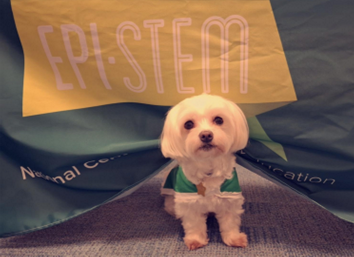
Anthony’s research investigates how care-based educational policies are framed in policy and interpreted and enacted within science teachers’ reported practices, examining science teaching as relational care work that attends not only to the acquisition of content knowledge but to students’ wellbeing, inclusion, and capacity to care for self, others (human and non-human), and ecological futures. Drawing from the theoretical work of the environmental scientist Donna Haraway, Anthony positions School Support Dogs as ‘pedagogical partners’, reimagining education as cultivating humans-in-relation rather than leading out (educo) competitive, achievement-oriented individuals.
Calie, The School Support Dog